


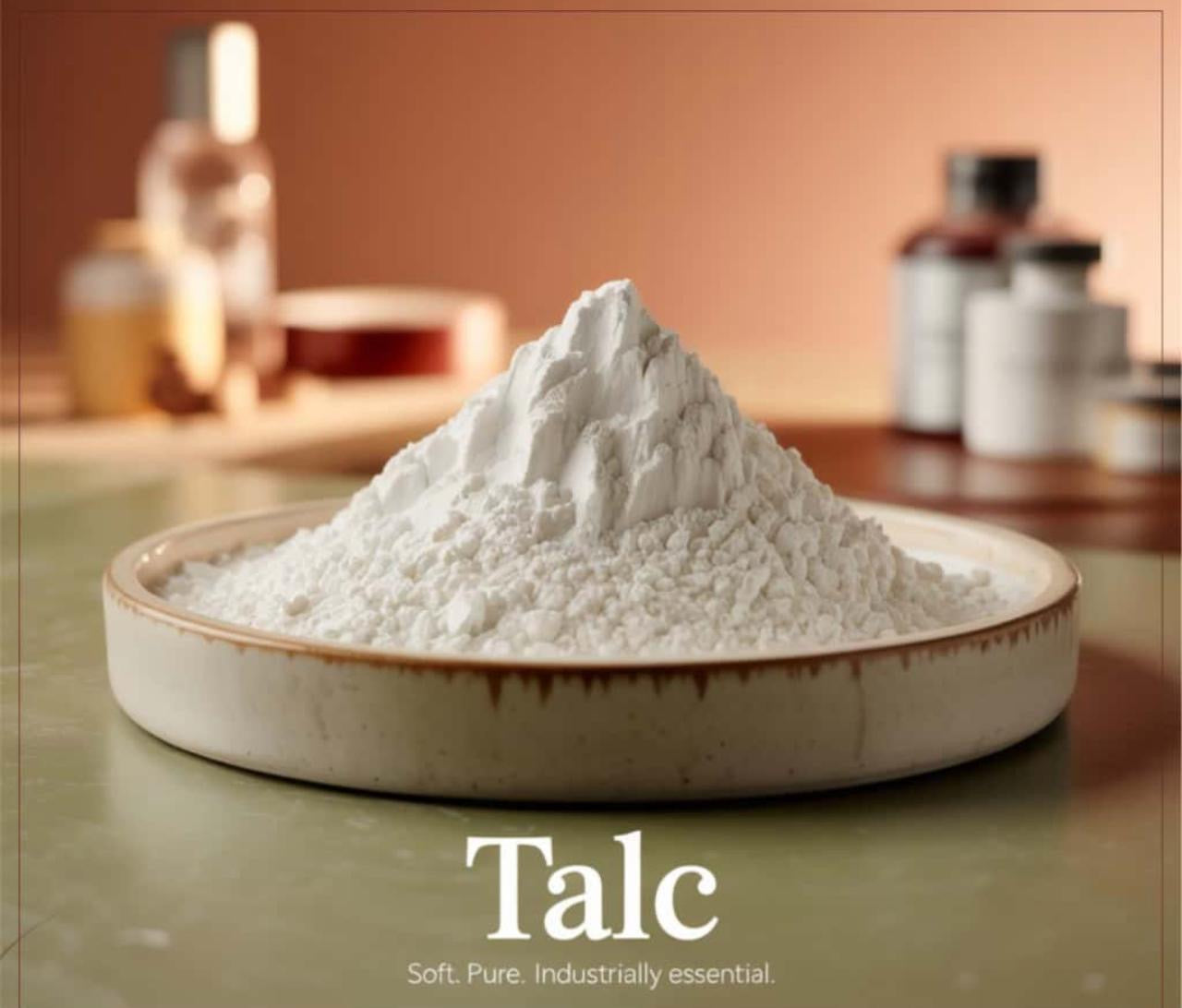
Food and Farm Grade Talc in the UAE – Trusted for UAE Standards
Food and farm-grade talc is a highly specialised mineral product used across agriculture, food processing, animal nutrition, and feed manufacturing industries. In the UAE and wider GCC region, this category of talc is subject to strict scrutiny due to its potential direct or indirect contact with food, crops, and livestock. As a result, only talc with exceptional purity, proven microbiological safety, and full regulatory documentation is acceptable for import, distribution, and use.
Unlike industrial or cosmetic talc, food and farm-grade talc must comply with food-contact and feed-safety regulations aligned with international benchmarks, including those established in the United Kingdom and the European Union. These standards are widely recognised and referenced by UAE authorities, making UK- and EU-compliant talc highly preferred for the UAE market.
This analysis provides a comprehensive overview of food and farm-grade talc, covering its composition, quality requirements, testing protocols, regulatory expectations, and applications relevant to food, agriculture, and animal feed industries in the UAE.
What Is Food and Farm Grade Talc?
Food and farm-grade talc is a refined, naturally occurring mineral composed primarily of magnesium silicate hydroxide (Mg₃Si₄O₁₀(OH)₂). It is extremely soft, chemically inert, and resistant to heat, moisture, and mild acids. Its lamellar (platy) particle structure provides excellent flow-enhancing, absorption, and anti-caking properties, making it indispensable in food handling and agricultural systems.
For UAE applications, this grade of talc must be suitable for direct or indirect contact with food and animal feed. This requires rigorous refinement and testing to ensure the material is free from asbestos, pathogenic microorganisms, and harmful heavy metals. Only talc meeting these purity standards is approved for food- and farm-related use within regulated supply chains.
Key Requirements for Food and Farm Grade Talc (UAE-Relevant)
1. Asbestos-Free Certification
All food-contact and feed-grade talc imported into the UAE must be 100% asbestos-free. Comprehensive mineralogical analysis is required to confirm the absence of amphibole and serpentine asbestos fibers. Certification from accredited laboratories is mandatory and commonly requested during customs clearance and regulatory inspections.
2. Microbiological Safety Testing
Microbiological cleanliness is a critical requirement for UAE food and feed applications. Talc must be tested to confirm the absence of harmful pathogens and to ensure an extremely low microbial load. Typical acceptance criteria include:
-
Total Plate Count: ≤ 1,000 CFU/g
-
Yeasts and Moulds: ≤ 100 CFU/g
-
Escherichia coli: Absent
-
Salmonella spp.: Absent in 25 g
-
Staphylococcus aureus: Absent
Only batches that meet these thresholds are suitable for use in food processing, animal feed, and agricultural environments in the UAE.
3. Heavy Metal Control
Heavy metal content must remain well below internationally recognised limits. UAE authorities generally reference FAO/WHO and EU thresholds, including:
-
Lead (Pb): < 10 ppm
-
Arsenic (As): < 3 ppm
-
Cadmium (Cd): < 1 ppm
-
Mercury (Hg): < 1 ppm
Routine analytical testing ensures product safety and regulatory acceptance.
4. Physical and Chemical Specifications
Consistency is essential for industrial reliability. Typical specifications include:
-
Whiteness: > 85%
-
Moisture Content: < 0.5%
-
Loss on Ignition: < 6%
-
pH (10% slurry): 8.0–9.5
-
Particle Size: 200–400 mesh (application-dependent)
These parameters ensure stable performance across food and agricultural processes in the UAE’s climate.
Applications in the UAE Food and Agricultural Sector
Food and farm-grade talc is widely used in the UAE due to its inert nature, safety profile, and functional benefits.
Animal Feed Manufacturing:
Used as an anti-caking and flow agent, talc prevents moisture-related clumping, ensures uniform mixing of nutrients, and improves handling during storage and transport.
Grain and Seed Treatment:
Applied as a coating to improve flowability, reduce spoilage, and enhance mechanical seeding efficiency, especially in large-scale farming operations.
Food Processing Applications:
Used as a controlled processing aid or carrier in approved food systems, including spice blends, confectionery processing, and tablet or supplement production, where permitted.
Agricultural Formulations:
Functions as an inert carrier for fertilizers, micronutrients, and crop protection products, improving dispersion and preventing agglomeration.
Packaging and Handling:
Reduces friction in food-handling machinery and conveyor systems without compromising hygiene or safety.
Regulatory Alignment for UAE Imports
Food and farm-grade talc supplied to the UAE typically aligns with:
-
EU food additive purity standards (E553b – Talc)
-
UK chemical safety and traceability frameworks
-
International feed hygiene and safety regulations
Compliance with these frameworks supports acceptance by UAE authorities and facilitates smooth customs clearance and market approval.
Quality Control, Documentation, and Traceability
Reputable suppliers serving the UAE market provide full technical documentation, including:
-
Certificate of Analysis (CoA)
-
Safety Data Sheet (SDS)
-
Asbestos-Free Certificate
-
Microbiological and heavy metal test reports
-
Full batch traceability from source to shipment
This documentation is essential for regulatory audits, food safety inspections, and commercial confidence.
Conclusion
Food and farm-grade talc supplied to the UAE must meet the highest standards of purity, microbiological safety, and regulatory compliance. Asbestos-free composition, controlled heavy metals, consistent physical properties, and full documentation are non-negotiable requirements.
When sourced from UK- and EU-compliant producers, food and farm-grade talc offers reliable performance, safety, and legal assurance for use in food processing, animal feed, seed treatment, and agricultural systems across the UAE and GCC region.


