


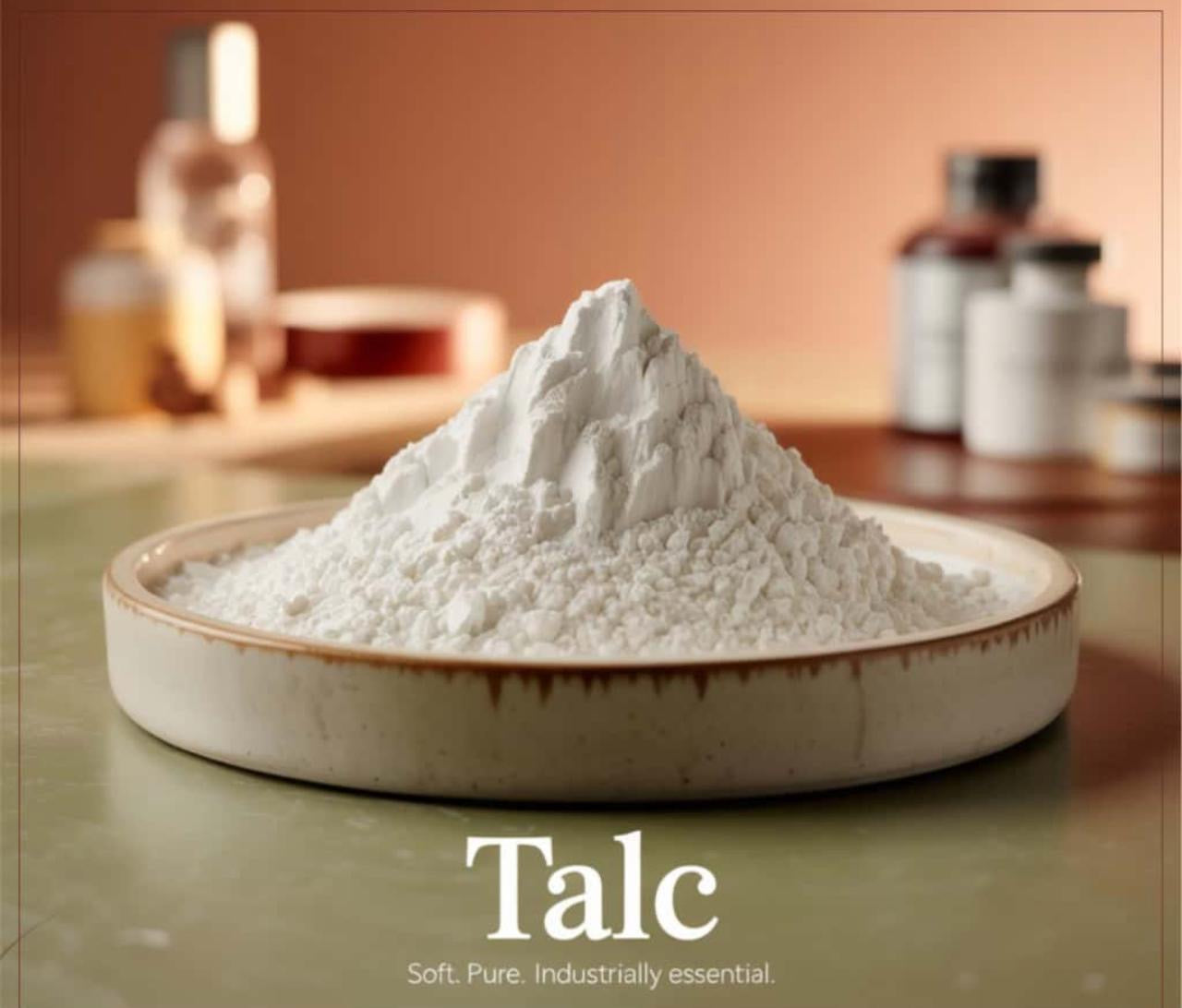
Food Grade Talcum Powder: Uses, Safety, Benefits, and Controversies
Food-grade talcum powder is a highly refined mineral additive widely used in the food industry for its unique physical and chemical properties. While talc is commonly associated with cosmetics, its role in food processing is less understood—and often debated. This article provides a comprehensive, evidence-based overview of food-grade talc, including its composition, applications, regulatory status, safety considerations, and controversies.
What Is Food-Grade Talcum Powder?
Talc is a naturally occurring mineral composed primarily of magnesium, silicon, oxygen, and hydrogen, chemically known as hydrous magnesium silicate . When processed into a fine powder, it becomes talcum powder.
Food-grade talc is a purified form of talc that meets strict safety and quality standards for ingestion. It is:
- Odourless and tasteless
- Chemically inert (non-reactive)
- Highly refined to remove impurities
- Certified to be free from contaminants such as asbestos and heavy metals
In the food industry, it is commonly labeled as E553b, an approved food additive.
Key Properties of Food-Grade Talc
Food-grade talc is valued for several functional properties:
- Anti-caking ability: Prevents clumping in powdered foods
- Lubrication: Reduces friction in manufacturing processes
- Moisture resistance: Repels water and improves shelf life
- Surface coating: Provides smooth textures and prevents sticking
These properties make it especially useful in processed and packaged foods.
Common Uses in the Food Industry
Food-grade talcum powder plays a supportive (non-nutritional) role in food production. Typical applications include:
1. Anti-Caking Agent
Talc is widely used to prevent clumping in:
- Table salt
- Icing sugar
- Powdered milk
- Seasoning blends
2. Confectionery and Candy Production
It helps:
- Prevent candies and chewing gum from sticking
- Improve texture and shape
- Coat sweets and marshmallows
3. Rice and Grain Processing
Talc may be applied to:
- Polished rice
-
Cereals and grains
to improve flow and handling.
4. Food Processing Aid
In manufacturing, talc is used to:
- Lubricate machinery
- Prevent food from sticking to molds or packaging
- Improve efficiency in high-speed production lines
Regulatory Status
European Union
- Approved as E553b (talc) under EU food additive regulations
- Subject to purity criteria and safety limits
United States (FDA)
- Considered Generally Recognized as Safe (GRAS) when used appropriately
- No pre-market approval required for most uses, but manufacturers must ensure safety
Global Standards
- Must meet strict purity requirements
- Should be asbestos-free, as contamination is a major concern
Safety Considerations
1. Asbestos Contamination Risk
One of the biggest concerns with talc is that it is often found near asbestos deposits in nature. If not properly refined, contamination can occur .
- Asbestos is a known carcinogen
- Regulatory bodies require food-grade talc to be asbestos-free
- However, testing limitations mean absolute guarantees are difficult
2. Health Risks from Ingestion
Current evidence suggests:
- Low risk when consumed in small amounts as a food additive
- Talc is inert and passes through the digestive system with minimal absorption
However:
- Some studies raise concerns about inflammation or long-term effects
- Research is ongoing, and conclusions are not definitive
A 2024 international review classified talc as “probably carcinogenic to humans”, though this is based largely on inhalation and certain exposure contexts rather than typical dietary intake .
3. Inhalation vs. Ingestion
It is important to distinguish exposure types:
|
Exposure Type |
Risk Level |
|
Inhalation (powder form) |
Higher risk (respiratory issues) |
|
Cosmetic use (long-term) |
Moderate concern |
|
Food ingestion (regulated amounts) |
Low risk |
Food-grade talc is not intended to be inhaled, and its use in food involves very small quantities.
Benefits of Food-Grade Talc
Despite controversies, food-grade talc offers several industrial advantages:
- Improves product consistency
- Enhances shelf life
- Reduces manufacturing costs
- Ensures smooth processing and packaging
- Maintains product appearance and quality
Without such additives, many powdered and processed foods would be more difficult to produce at scale.
Controversies and Public Perception
Talc has been under intense scrutiny due to:
- Lawsuits related to cosmetic talc and cancer claims
- Increased regulatory attention
- Growing consumer preference for “clean-label” products
Recent discussions highlight that:
- Risks are more associated with cosmetic and inhalation exposure
- Food-related exposure appears minimal but still under study
As a result, some manufacturers are moving toward alternatives like:
- Cornstarch
- Silicon dioxide
- Calcium silicate
Alternatives to Food-Grade Talc
Common substitutes include:
|
Alternative |
Function |
|
Silicon dioxide (E551) |
Anti-caking agent |
|
Calcium silicate (E552) |
Moisture control |
|
Cornstarch |
Natural anti-caking |
|
Rice flour |
Coating and dusting |
These are often used in “talc-free” or organic food products.
Future Outlook
The future of food-grade talc depends on:
- Improved testing for contaminants
- Stricter global regulations
- Consumer demand for transparency
- Advances in alternative additive
While not banned, its use may decline as safer or more natural substitutes gain popularity
Conclusion
Food-grade talcum powder (E553b) is a functional food additive used primarily as an anti-caking and processing aid. When properly refined and regulated, it is considered safe for consumption in small amounts. However, concerns around asbestos contamination and evolving scientific research continue to influence public perception and regulatory scrutiny.
For consumers, the key takeaway is awareness:
- Food-grade talc is different from cosmetic talc
- It is used in very small quantities
- Regulatory bodies deem it safe under controlled conditions
Still, as with many additives, transparency and moderation remain essential.


